Maryland Trailer Laws & Towing Regulations: What You Need to Know
Most drivers don’t think about towing laws. However, if you fail inspection, have an emergency roadside stop, or get into an accident, you will want to know if your trailer and towing are compliant with Maryland laws. Without adhering to local laws, you could be at risk for fines, penalties to your CDL license, or possible jail time.
If you own or operate a trailer in Maryland, towing laws and regulations apply whether you’re hauling mulch across town or moving heavy equipment down I-95. Maryland has well-defined trailer and towing requirements, covering everything from how your trailer is titled to how its brakes need to perform at speed.
Understanding Maryland towing laws saves you time, money, and stress. Learn about Maryland trailer laws and how to manage trailer titles, registration, inspections, and towing.
About C&C Trailers
C&C Trailers is a Maryland State Safety Inspection Station. We sell new and used trailers and supply trailer accessories. Our staff can take care of repairs, troubleshooting, and local regulation adherence. Located in Gaithersburg, MD, you can drop by or call for an appointment with a tech.
What Qualifies as a Trailer in Maryland
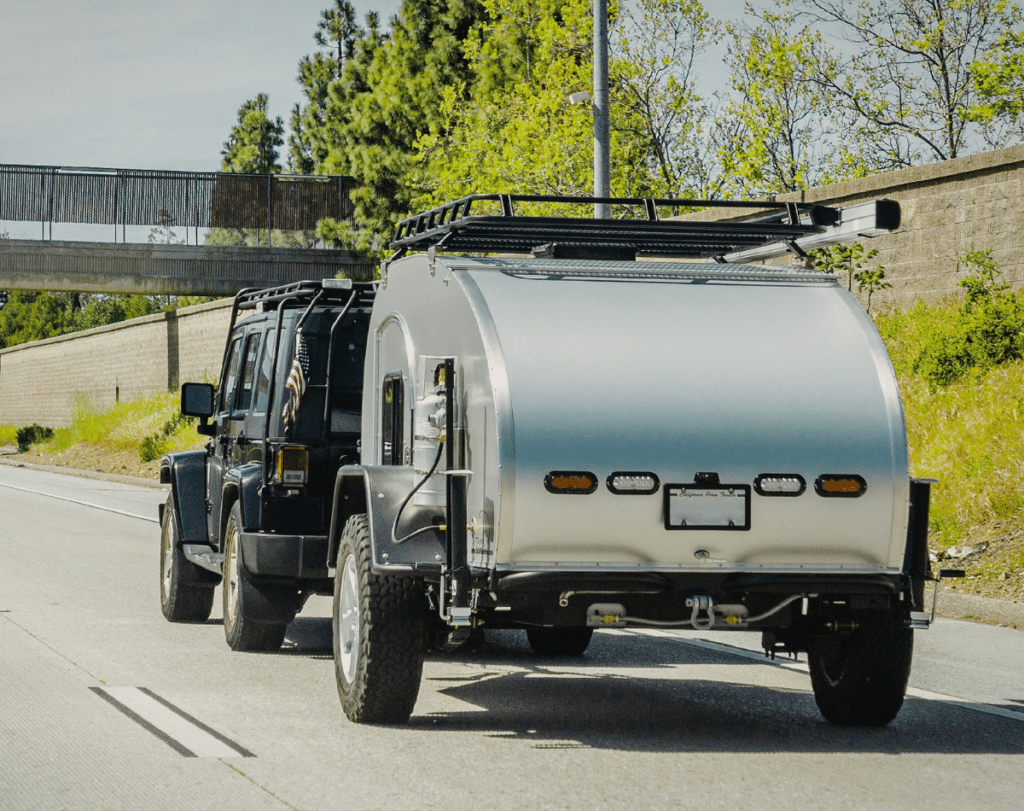
A trailer, as defined in Maryland, is any non-motorized vehicle designed to carry property and be towed. This broad definition includes utility, equipment, dump, and enclosed trailers, regardless of purpose. If used on public roads, Maryland’s safety and registration requirements apply.
Trailer Titles & Registration
Just like vehicles, trailers in Maryland need to be titled and registered. Every trailer on public roads, new or used, must be titled and registered through the MVA. If you tow your trailer without a title or registration in Maryland, you risk fines and legal problems. Even if you plan on reselling your trailer, without a title you could run into legal liabilities.
To get your trailer titled in Maryland, you’ll need to gather the required documentation before heading to the MVA. This includes the trailer’s Vehicle Identification Number (VIN), a bill of sale, your driver’s license or state-issued ID, proof of insurance, and documentation of the purchase price. If any of these are missing — especially the VIN or bill of sale — the process can be delayed. If you want to use your trailer, you must have your documentation in order.
Maryland also requires a safety inspection before registration can be approved. Even if buying a trailer privately, an inspection is required. All trailers must be physically inspected and cleared before they become street legal.
At C&C Trailers, we provide certified Maryland trailer inspections and can fix any issues on-site to help you pass the first time. Less hassle, quicker clearance, and clear answers.
Trailer Brake Laws in Maryland
Brake requirements are one of the most important — and most actively enforced — trailer laws in Maryland. Many trailer owners either don’t know common brake thresholds or assume their trailer is under the limit when it isn’t. Getting trailer brake regulations wrong isn’t just a compliance issue; it’s a safety issue that can have serious consequences at highway speeds or on steep grades.
Maryland breaks trailer brake requirements down by Gross Vehicle Weight Rating (GVWR). Trailers under 3,000 pounds typically don’t require brakes, though that doesn’t mean they shouldn’t have them. Once you cross the 3,000-pound threshold, brakes are required on at least one axle. For trailers over 10,000 pounds, Maryland law requires brakes on all wheels — no exceptions. Every trailer must also be equipped with a parking brake system capable of holding the full loaded weight on any incline, and the overall braking system must be sufficient to safely manage the combined weight of both the towing vehicle and the trailer.
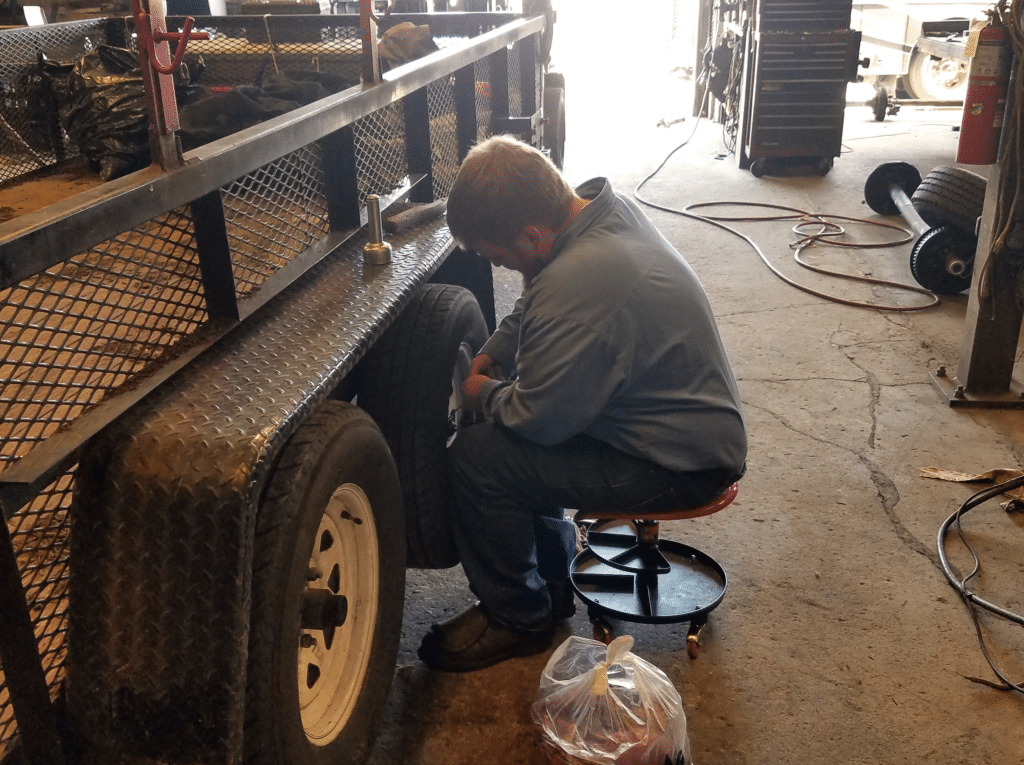
Our team offers brake inspections, installations, and repairs to keep you compliant and safe. We can help determine exactly what your trailer needs, both to meet Maryland laws and to meet your towing needs. Learn more about our trailer brake services in Gaithersburg, MD.
Trailer Safety Inspections: Required in Maryland
Before your trailer can be legally registered, it must pass a Maryland safety inspection.
- A trailer safety inspection is a thorough review of your trailer’s lights and wiring to ensure everything is functional and properly connected.
- Inspectors will check your brake systems for both performance and compliance with weight-based requirements.
- Tires and suspension are examined for wear, damage, and load rating.
- The structural integrity of the trailer frame itself is assessed — cracks, welds, and corrosion all matter.
- Finally, the hitch and coupling systems are checked to confirm they’re rated appropriately and properly secured.
If any of these areas fail, you’ll need to make repairs before the trailer can be registered and legally used on public roads. Regular inspections ensure long-term safety and help avoid costly breakdowns.
As a certified inspection station, we can handle inspections, repairs, and parts — all in one place in Gaithersburg, MD.
Hitch & Coupling Requirements
Maryland law requires that your trailer be securely and properly connected to your towing vehicle at all times while on public roads. This requirement goes beyond hooking up a ball hitch and driving away. The hitch itself must be rated for the weight of the trailer and its load; using an undersized hitch is both illegal and dangerous.
The connection must be secure at the frame level, not just at the ball mount. Safety chains are required as a backup in case the primary hitch connection fails. The safety chains need to be crossed underneath the tongue of the trailer and have enough slack to allow for turns without dragging on the road.
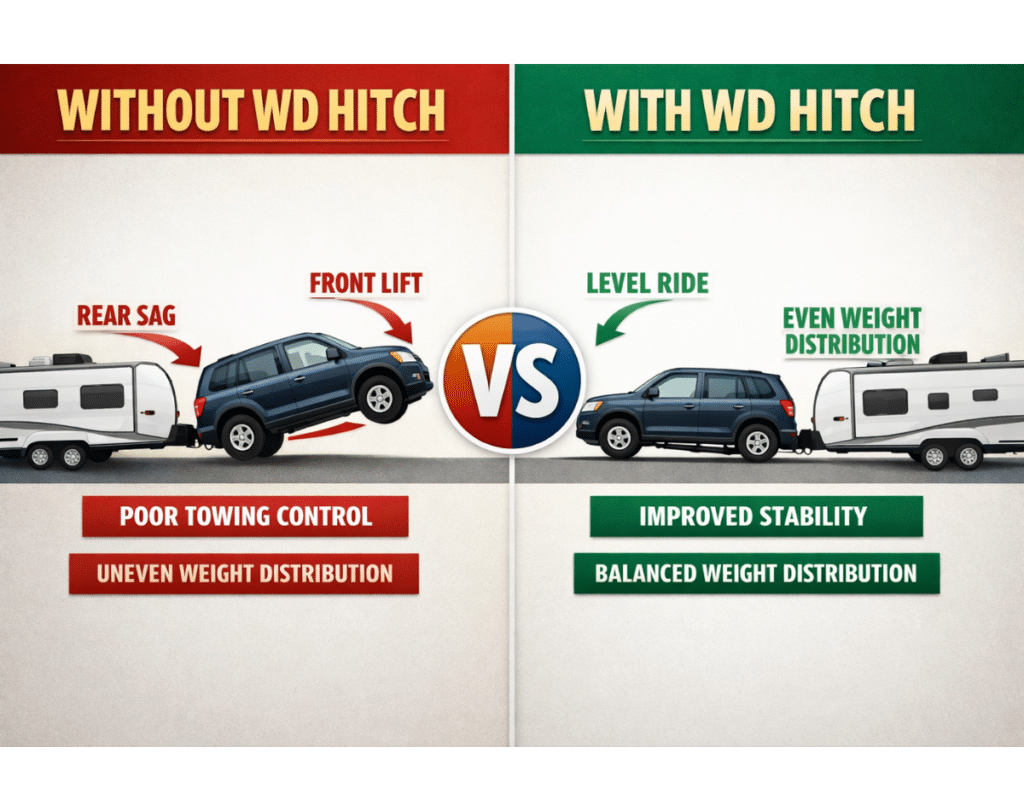
Improper hitch setups are one of the leading causes of trailer accidents in Maryland, and they’re also one of the most common reasons trailers fail inspection. We offer custom hitch installation, gooseneck, and fifth-wheel setups to ensure your towing system is built correctly from the start. Ask us about weight distribution hitches and your options.
Weight Limits & Safe Towing
Aside from trailer safety inspections, you must also know how to properly load your trailer. Weight distribution is one of the most overlooked aspects of safe towing, and it’s where even experienced operators make mistakes.
You should never exceed your towing vehicle’s rated towing capacity. The towing capacity accounts for both the trailer’s weight and its cargo. Beyond total weight, how that weight is distributed across the trailer matters. Cargo should be loaded so that roughly 60% of the weight sits in the front half of the trailer, which helps maintain proper tongue weight and keeps the trailer tracking straight behind the vehicle.
Tongue weight (the downward force the trailer exerts on the hitch) should generally fall between 10% and 15% of the total trailer weight. Too little tongue weight and the trailer becomes unstable; too much and it puts excessive strain on the rear of the tow vehicle, affecting steering and braking.
When weight distribution goes wrong, the consequences can be severe: trailer sway at highway speeds, dramatically reduced braking performance, and a significantly higher risk of losing control. This is especially important for the types of conditions Maryland roads and weather constantly present to drivers.
Common Trailer Law Violations in Maryland
After decades of working with Maryland trailer owners, the team at C&C Trailers has seen the same violations come up again and again. Missing or non-functional trailer brakes top the list, often because owners don’t realize their trailer crosses the weight threshold that triggers the requirement.
Overloaded trailers are another frequent problem, particularly on equipment and dump trailers where loads can exceed legal limits. Faulty lighting and wiring issues keep popping up, whether from age, damage, or a bad DIY repair. Improper hitch installations (wrong rating, poor attachment, missing safety chains) are both common and dangerous.
And then there’s the inspection itself: a surprising number of owners simply skip it, either because they didn’t know it was required or because they assumed their trailer was fine without one. All of these issues can result in failed inspections, roadside citations, or something far worse.
Maryland Driving Conditions: Why Compliance Matters
Maryland’s geography and road network create a unique set of towing challenges you don’t find in flatter, less congested states. In Western Maryland, the mountain grades along routes like US-40 and I-68 put real demands on the braking system: an underpowered or poorly maintained brake setup can overheat and fade on a long downhill run.
On the Eastern Shore, open stretches of highway with consistent crosswinds can turn trailer sway from a minor nuisance into a genuine emergency, especially with lighter or improperly loaded trailers. In the metro corridors (I-270 heading into D.C. or I-95 through Baltimore), stop-and-go traffic and sudden slowdowns mean your brakes need to be in top condition at all times.
Compliance isn’t just a legal checkbox: it’s the difference between a routine trip and a serious incident. With so much at stake, working with a local expert can make all the difference!
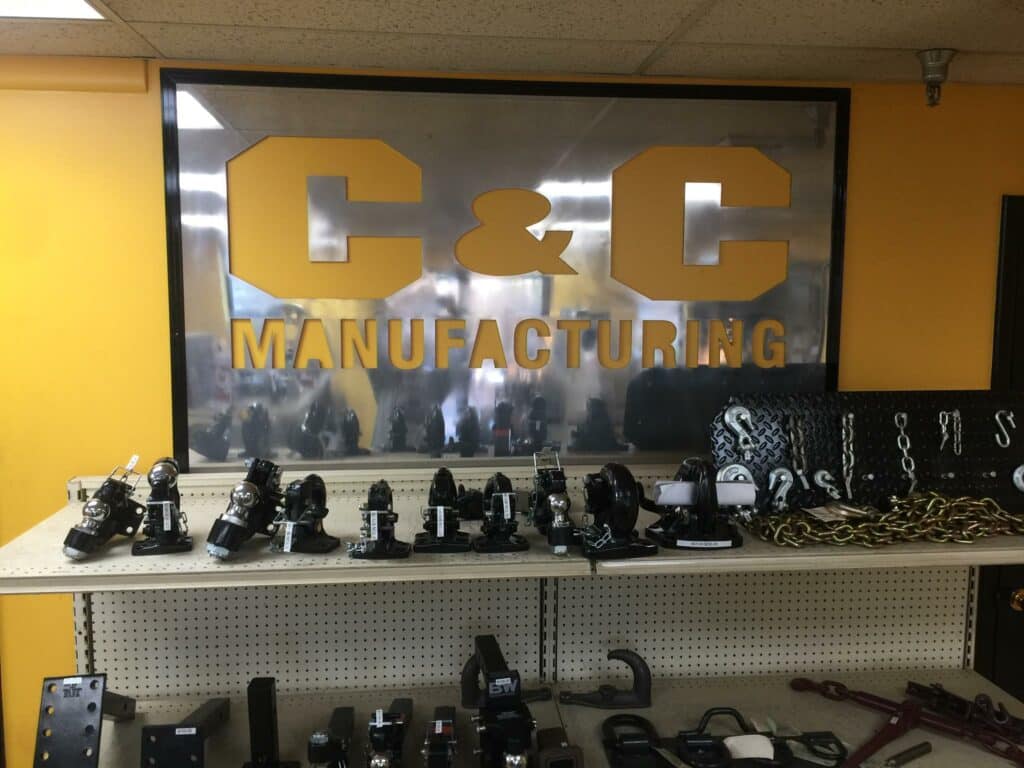
Contact C&C Trailers Today for Your Inspection and Repairs
Maryland trailer laws aren’t complicated: every trailer on public roads needs to be titled, registered, and inspected. There are no exceptions for used trailers or short trips. Brake requirements scale with weight, but the underlying principle is constant: your trailer must be able to stop safely under load, in real conditions. Your hitch, wiring, and weight distribution all have legal and safety implications that go beyond just passing inspection. And if you’re towing in Maryland’s mountains, along its open coastal roads, or through its busy urban corridors, having a properly equipped trailer isn’t optional — it’s what keeps you and everyone else on the road safe.
Since 1974, C&C Trailers has been the go-to resource for Maryland trailer owners who want to get things done right. Over five decades, our team has built a reputation for honest work, deep expertise, and hands-on service that is hard to find anywhere else. Whether you’re in the market for a new or used trailer, need a repair handled quickly, or want a custom fabrication built to your exact specs, C&C Trailers handles it all under one roof.
Our shop also carries a full inventory of trailer parts (axles, brakes, tires, wiring, and more), so repairs don’t require waiting on outside suppliers. And as a certified Maryland inspection station, C&C Trailers can inspect your trailer, identify any issues, and fix them on the spot, so you’re not making multiple trips or dealing with multiple vendors.
If you’re unsure whether your trailer meets Maryland requirements, it’s always better to check before you tow. Stop by C&C Trailers or give us a call to schedule an inspection, repair, or consultation.
FAQs
Do I need to title a used trailer in Maryland?
Yes. Maryland requires all trailers used on public roads to be titled and registered through the MVA, regardless of whether they’re new or purchased used from a private seller.
Do I need trailer brakes in Maryland?
It depends on the weight of your trailer. Trailers under 3,000 pounds GVWR typically don’t require brakes under Maryland law, though having them is recommended. Trailers between 3,000 and 10,000 pounds need brakes on at least one axle, and anything over 10,000 pounds requires brakes on every wheel. All trailers, regardless of weight, must have a parking brake capable of holding the load on a grade.
Where can I get a Maryland trailer inspection?
C&C Trailers is a certified Maryland inspection station and has been serving trailer owners across the state since 1974. We can inspect your trailer, handle any repairs needed to pass, and get you back on the road, all in one visit. Give us a call or contact us online today.