
How to Safely Load and Balance a Trailer
Why Proper Trailer Loading Is a Safety Issue, Not Just a Skill
When it comes to trailer loading, it can be hard to understand the details, math, and balance of a safely loaded trailer. At CC Trailers, we want to help our customers understand the risks of an unbalanced trailer, like trailer sway, jackknifing, improper braking, tire blowouts, and axle damage.
Safely loading and balancing a trailer remains one of the key ways to prevent dangerous trailer sway that can become fatal at highway speeds. For civilian drivers alone, the National Highway Traffic Safety Administration found that about 730 people are killed and 17,000 more are injured because of objects in the road each year. Over 80% of those crashes involve unsecured loads on passenger vehicles.
Thankfully, most trailer accidents are preventable with correct loading practices. In this guide, we’ll cover what others miss; you’ll understand not just how to load your trailer, but how to load safely and legally so everyone is safer on the road.
Understanding Trailer Sway: What It Is and How to Stop It
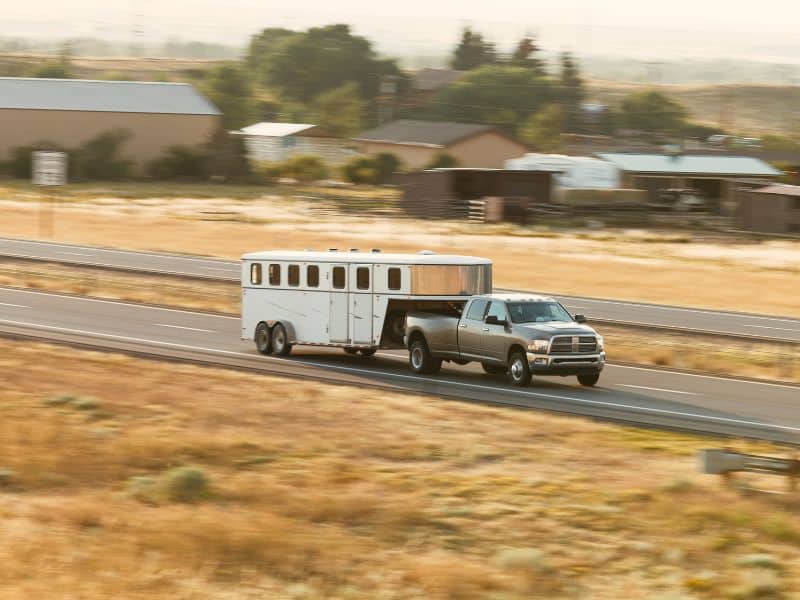
Contrary to its name, trailer sway is not a steering issue. Trailer sway is a balance-and-leverage problem that occurs when a trailer’s mass oscillates side-to-side faster than the tow vehicle can correct it. Proper loading means the weight is positioned slightly forward of the trailer’s axle(s), creating downward force on the hitch (tongue weight). This keeps the trailer tracking straight behind the tow vehicle.
However, when a trailer is rear-heavy, unevenly loaded, or improperly secured, the center of mass shifts behind the axle. At highway speeds, small forces such as wind gusts, passing trucks, road imperfections, or minor steering inputs can cause lateral movement and sway.
What should your immediate actions be if the trailer begins to sway?
- Don’t panic. Remain calm.
- Do NOT accelerate or brake hard.
- Gradually slow down.
- Maintain steering control.
The first and best way to prevent sway is obvious: practice proper loading techniques.
Step 1: Know Your Trailer and Tow Vehicle Limits (Before You Load Anything)
Veteran drivers know they need to understand the GVWR (Gross Vehicle Weight Rating), GAWR (Gross Axle Weight Rating), tongue weight limits, and tow vehicle towing capacity before they touch the pedal.
The limits of a truck and its load should be on the trailer’s data plate, the tow vehicle’s door sticker/the owner’s manual, and the hitch rating. The lowest-rated component in the towing system determines what is safe to haul. Always familiarize yourself with this information before loading your trailer and hitting the road.
Step 2: Distribute Weight Correctly to Prevent Trailer Sway
For most tow vehicles, the Ideal weight distribution is 60% of the load forward of the axle(s), with 10% to 15% of the total trailer weight on the tongue. As mentioned above, an incorrect balance causes sway due to excessive rear weight or uneven side-to-side loading, which amplifies small external forces you encounter. This load distribution prevents the dangerous sway of a trailer.
Step 3: Load Heavy Items First—and Load Them Low
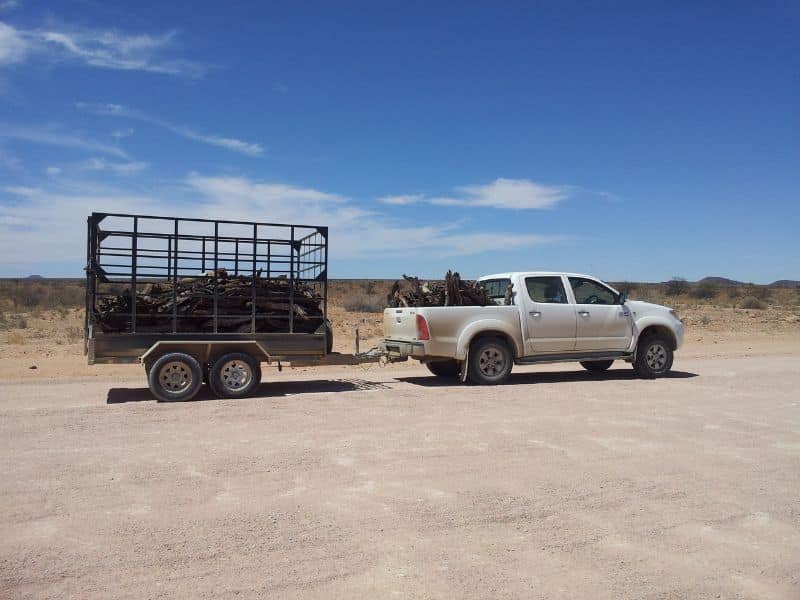
As you begin loading, take the process in small steps. You’ll want to place the heaviest cargo low to the trailer floor, centered over or slightly forward of the axle. Creating a low center of gravity reduces the load’s leverage as the trailer moves.
A higher center of gravity makes a trailer more susceptible to wind, bumps, and other forces, which can lead to sway, reduced tire traction, and a higher risk of tipping or loss of control.
Common rookie mistakes when loading a trailer include stacking heavy items on top of one another or loading all the weight at the rear for “easy unloading,” but both can cause issues. These mistakes can heighten the center of gravity, reduce tongue weight, increase trailer sway, strain axles and suspension components, and significantly increase the risk of loss of control while driving.
Step 4: Balance the Load Side-to-Side
Next up is lateral weight distribution. Ensure both sides are level through visual and physical checks. This prevents tracks, uneven tire wear, sluggish or pulling steering, and stress on suspension components.
Step 5: Secure the Load Properly (Not Just “Tight Enough”)
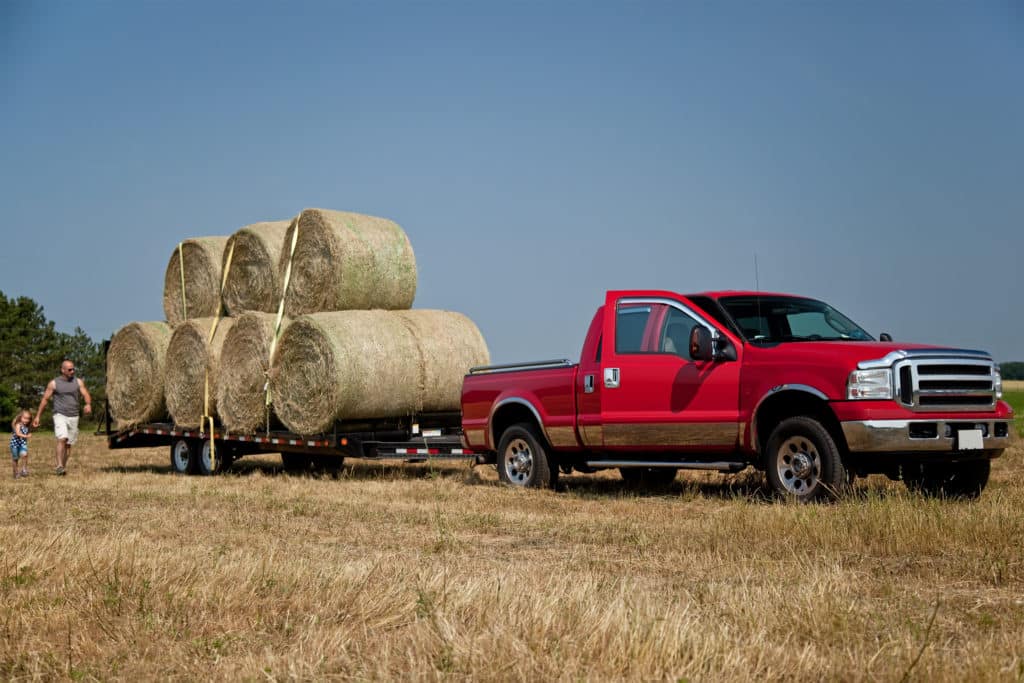
Depending on the load, ensure you’re using the appropriate equipment to secure it to the tow. Tools such as ratchet straps, load bars, and chains are effective for securing loads. CC Trailers sells a variety of trailer accessories to help with loading all trailer types.
Loose cargo is almost never safe — even if weight is distributed correctly — because those small external forces like wind or other drivers can shift the cargo during the trip, thereby throwing off your balance and control of the trailer.
Step 6: Check Tires, Axles, and Suspension Before Hitting the Road
Once the load is on, balanced, and secured, it’s nearly time to leave. This is the moment to check the other factors that affect your drive, including tire pressure, axles, leaf springs, and bearings.
Do this again, even if you checked all the parts before you started this process. Why? Because loading stress reveals weak components — and not checking after loading might mean you miss a big red flag.
Legal and Liability Considerations
Incorrect loading poses more than just a risk to life, limbs, and equipment. Investigations into accidents that find loads improperly loaded can void warranties, lead to citations and/or fines, or increase liability insurance.
It’s a driver’s responsibility to follow manufacturer specifications, so “not knowing” the numbers or loading particulars probably won’t protect trailer owners in a legal situation.
Step 7: Final Walk-Around and Test Drive
Now that you’ve loaded properly, it’s time to test if everything is 100% secure before you get out on the road. Your pre-trip checklist should ensure that:
- The hitch is secure.
- Your safety chains are crossed.
- All internal and external lights are working.
- You’ve re-checked the load.
On your short test drive, listen for noise first. Mute any music or podcast you’d listen to and remain keenly aware of normal versus non-normal sounds. In addition, feel for any swaying or pulling that might cause trouble as you make your way down the road.
Finally, when there’s a pull-off point, re-tighten straps after the first few miles. This allows you to perform a final check once the load has traveled at highway speeds.
Safe Loading Protects You, Your Trailer, and Everyone Else
Proper loading techniques prevent damage, accidents, and stress. It’s much easier (and safer!) to practice proactive loading habits instead of last-minute or on-the-road fixes. For more information, expert advice, or trailer support, choose CC Trailers.